Projects
Current projects
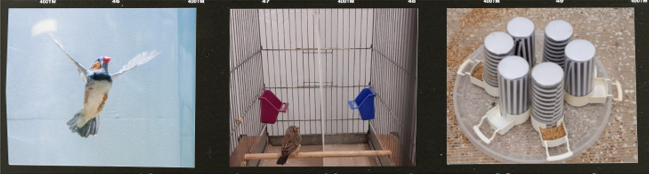
Ecophysiology of learning and memory
The influence of environmental and physiological factors on cognitive abilities (e.g., colour and pattern recognition) in zebra finches.
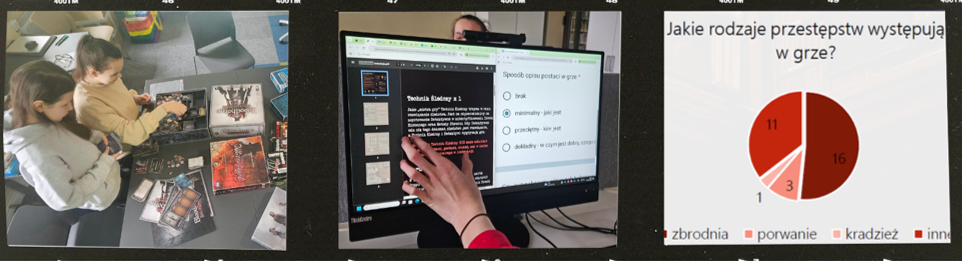
Board games as a tool for STEAM competencies
A systematic review of board games as a tool for developing STEAM competencies and Open Science attitudes among teenagers.
Completed projects
Ecophysiology of learning
Our world is currently facing an increase in climate unpredictability and short-term variability, which made it increasingly relevant to study whether animals were able to cope with those changes. The aim of this project was to study the effect of temperature unpredictability in different time scales on learning efficiency in a model songbird. We used zebra finches to answer questions such as: a) did living in a variable ambient temperature entail physiological costs that negatively affected learning, b) were different types of learning affected by the variable temperature in the same way, c) could parents alleviate the effect of the ambient temperature on their offspring, and d) whether offspring which developed in variable conditions were better at adapting to the prevailing environmental conditions experienced in adulthood.
Cooperation: ChuChu Lu, Maëlle Lefeuvre (Institute of Environmental Sciences), Carlos Botero (Washington University in Saint Louis)
Funding: National Science Centre
Synthesis and meta-analysis of paternal effects
Although in each sexually reproducing organism an individual has a mother and a father, non-genetic inheritance had been predominantly studied in the form of maternal effects. During my sabbatical year in Sydney I carried out a quantitative research synthesis of the field of paternal effects, as well as a meta-analysis of the relative strength of paternal compared to maternal (and synergistic) dietary effects on offspring performance. Both manuscripts were prepared as part of this project.
Cooperation: Shinichi Nakagawa, Małgorzata Lagisz & Russell Bonduriansky (University of New South Wales)
Funding: Polish National Agency for Academic Exchange (sabbatical)
Maternal hormones and offspring gene expression
We studied the causes and consequences of differential gene expression in male and female offspring. We found that male embryos grew faster than female embryos even before gonadogenesis, most likely due to overexpression of the growth hormone receptor gene and three other genes responsible for cell cycle regulation and metabolism, all located on the Z chromosome (Tagirov & Rutkowska 2014). Subsequent experiments examined the effects of maternal hormones on sex-specific gene expression in zebra finch offspring.
Cooperation: Makhsud Tagirov, Szymon Drobniak, Dorota Lutyk
Funding: National Science Centre
Physiology of aging: integrating over different levels of biological organization
In this project we used three distinctive age classes (0.5, 2 and 4.5 years old) of zebra finches. We demonstrated that vertical take-off flight performance declined with age (Labocha et al. 2015). The ultimate aim of this project was to link individual performance with tissue-specific aging.
Cooperation: Ulf Bauchinger, Edyta Sadowska, Mariusz Cichoń, Marta Labocha
Sexy non-significant results
In evolutionary biology, there were several well-established opinions that needed new insight and potential revision. With meta-analytical help from Shinichi Nakagawa and support from other co-authors, I carried out two studies of this kind. We found that the commonly accepted view of gradual shortening of the W chromosome over evolutionary time was not supported in birds (Rutkowska et al. 2012). We also revealed a lack of egg sexual size dimorphism across avian species (Rutkowska et al. 2014).
Cooperation: Shinichi Nakagawa, Małgorzata Lagisz (Otago University), Anna Dubiec (Polish Academy of Sciences)
Evolutionary cost of immunocompetence in birds
We studied the significance of genetic and maternally transmitted components of immunity. Experiments were conducted on zebra finches using non-pathogenic antigens that induced an immune response. We found that the magnitude of maternal immune response negatively correlated with offspring viability (Rutkowska et al. 2011). We also found that eggs bearing male and female offspring differed in maternal antibody content, and were the first to report sex-specific consequences of maternal immunization (Martyka et al. 2010). Our newest finding linked the effect of maternal immunization, female oxidative status, yolk antioxidants and offspring survival (Casasole et al. 2016).
Cooperation: Giulia Casasole, Mariusz Cichoń, Aneta Arct and Rafał Martyka (Polish Academy of Sciences)
Reproductive strategies in an urban population of the European blackbird (Turdus merula)
We found increased maternal investment to sons versus daughters, expressed in egg sexual size dimorphism (Martyka et al. 2010) — a phenomenon explained by higher fitness variation among males in the European blackbird. We also studied the relationship between mate switching and extra-pair paternity in this species.
Cooperation: Kazimierz Walasz, Mariusz Cichoń, Rafał Martyka, Anna Dybek (Institute of Environmental Sciences), Artur Jarmołowski, Marlena Lembicz and Artur Rogowski (Institute of Molecular Biology and Biotechnology, Adam Mickiewicz University)
How interactions with a male affect maternal investment in a polygynous species
The model organism in this study was the captive Japanese quail (Coturnix japonica). The project revealed that a female's anticipation of a mating opportunity gave her better control over maternal investment in sons and daughters (Rutkowska & Adkins-Regan 2009). We also determined to what extent an increase in female corticosterone level was specific to actual mating with a male, compared to visual and auditory contact with a male and to social interaction with another female (Rutkowska et al. 2011).
Cooperation: Elizabeth Adkins-Regan and Ned Place (Cornell University)
Offspring sex determination: ecological context and proximate mechanism of non-random meiosis in birds
The aim of this project was to describe the proximate mechanisms behind adaptive offspring sex adjustment in birds (Rutkowska & Badyaev 2008). As a model system, I used the house finch (Carpodacus mexicanus).
Cooperation: Alex Badyaev (University of Arizona)
The effect of testosterone on primary sex ratio and offspring performance in zebra finches (Taeniopygia guttata)
We found the cause-and-effect relationship between maternal androgens and the proportion of sons among offspring (Rutkowska & Cichoń, 2006), and showed that elevated androgen levels could have negative effects on the mother (Rutkowska et al. 2005). We also showed how maternal androgens affected survival, development and reproductive success of male and female offspring (Rutkowska et al. 2007).
Resource quality and sex allocation in zebra finches (Taeniopygia guttata)
We found that female birds reacted to an immediate change in food quality during clutch formation by adjusting the sex of subsequently laid eggs within a clutch (Rutkowska & Cichoń, 2002), showing that female birds controlled offspring sex to a great extent. We also found that the increase in egg mass with laying sequence compensated for the negative effects of hatching asynchrony, and that sex allocation could influence competition among offspring in asynchronously hatching broods (Rutkowska & Cichoń 2005).
Cooperation: Mariusz Cichoń
Costs of rearing sons versus daughters in the bank vole (Clethrionomys glareolus)
In 2003 I took part in studies of maternal investment to male and female offspring in mammals, as part of a project led by Drs Tapio Mappes and Esa Koskela at the University of Jyväskylä (Finland). Our results revised the common assumption that in polygynous mammals male offspring receive more resources and are more valuable to their mothers (Koskela et al. 2009). Assessing the maternal energy budget also helped us reveal a trade-off between current and future sex allocation in this small mammal (Rutkowska et al. 2011).
Cooperation: Esa Koskela and Tapio Mappes (University of Jyväskylä)